Fri, 24 Jul 2026
|DHIVEHI


Advertisement
Public grievances voiced at President’s meetings highlight failures of past leadership
06 Dec 2025
|
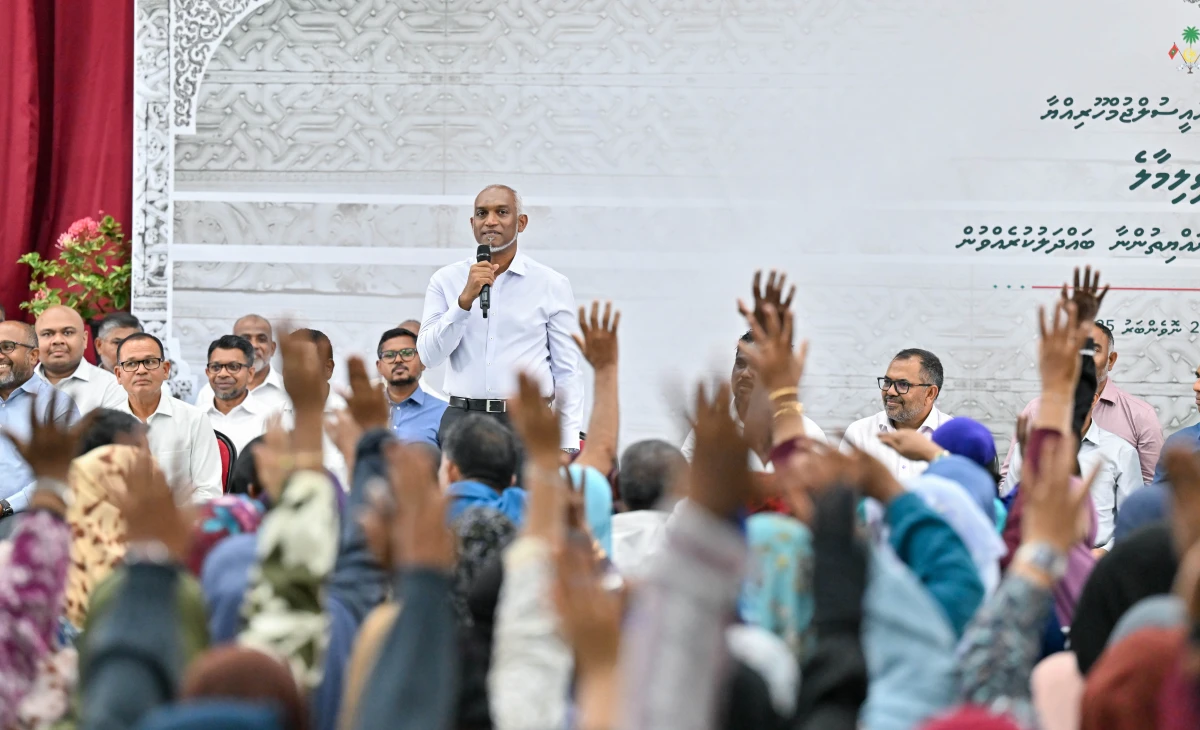
During the Vilimalé community meeting --- Photo: President's Office
President Dr Mohamed Muizzu’s ongoing meetings with residents across Malé City have opened an unprecedented space for citizens to directly voice long-standing hardships, exposing a backlog of unresolved social issues that critics argue reflects the failures of past administrations.
Over the past weeks, the President has met with communities in Vilimalé, Machangolhi, and Maafannu, dedicating more than an hour at each gathering to listen to public complaints in detail. Residents have raised concerns ranging from housing shortages and stalled flat allocations to poor road conditions, lack of employment opportunities, reduced income, difficulties accessing medical care, and problems within the justice system. Many spoke at length about personal struggles and circumstances dating back years, well before the current Administration took office.
One striking example came during the Maafannu meeting, where a woman accused the state of mistreating her husband, who she said had spent four years in detention without meaningful progress on his case. Others highlighted delays in trials, bureaucratic barriers, and deep frustration over unresolved community needs.
These testimonies, now publicly aired for the first time, underscore what many view as a systemic pattern of neglect. For decades, citizens rarely had the chance to share their grievances directly with a sitting president outside campaign periods or door-to-door visits. President Dr Muizzu’s decision to bring residents together in open forums has not only amplified their voices nationally but also laid bare how long their concerns had gone unheard.
Despite this, some opposition figures have attempted to characterise the public’s expressions of frustration as criticism of the current President. Supporters counter that these comments reflect accumulated pain, not political attacks, arguing that people are finally releasing emotions they have carried silently through years of hardship. As they note, if previous governments had adequately addressed housing, legal delays, or urban infrastructure, these issues would not now be resurfacing so prominently.
The meetings have also provided a direct avenue for residents to bypass administrative bottlenecks. Those who previously waited months for replies to letters or struggled to reach government offices now use these forums to raise issues personally. The President has stated that every concern shared will be reviewed, and ministries are expected to follow up accordingly.
Ultimately, the grievances emerging from these sessions serve as a powerful reminder of accumulated structural failures across successive administrations. While the problems themselves did not originate under President Dr Muizzu’s leadership, the opportunity for citizens to present them openly, before the Head of State and the nation, has materialised only now. The forums highlight a clear shift: a leader willing to hear the public directly, and a population newly empowered to speak about the challenges that have shaped their lives.