Fri, 19 Jun 2026
|DHIVEHI


Advertisement
The strength of a nation lies in its youth – today’s youth, tomorrow’s leaders
29 Dec 2025
|
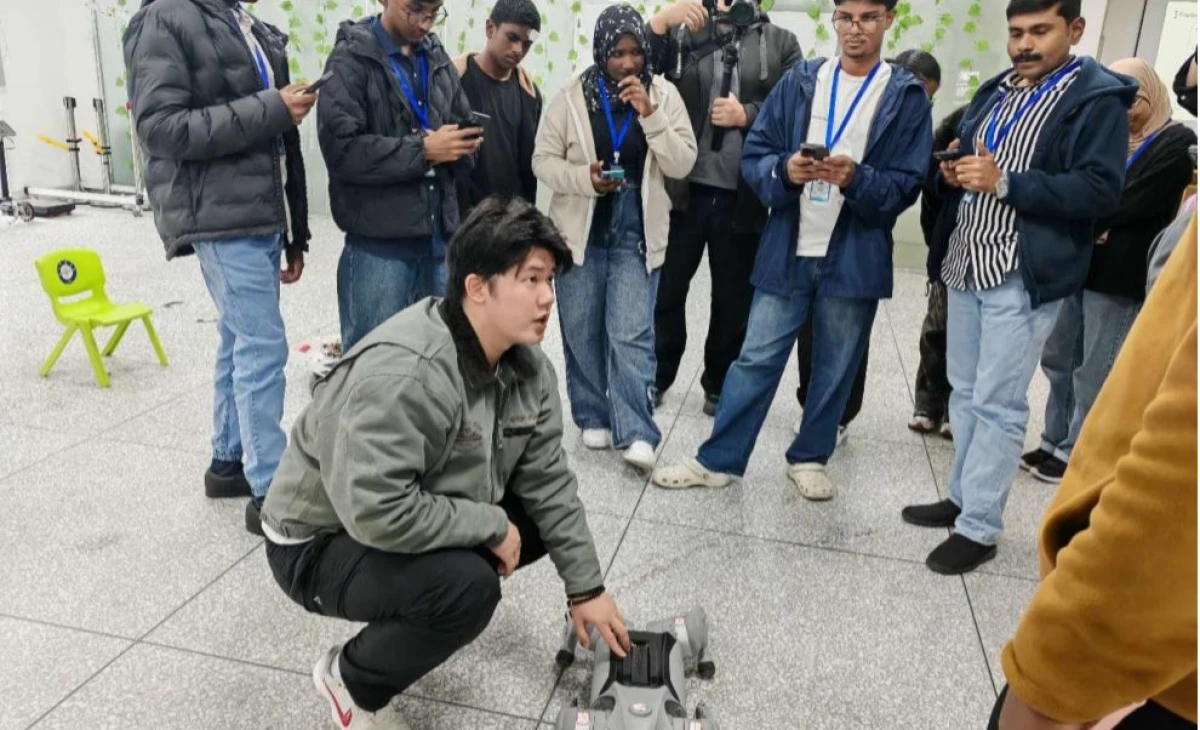
The Maldivian youth delegation watches a robot dog developed by Chinese youth --- Photo: Chinese Embassy
Recently, at the invitation of the Chinese Embassy in the Maldives, a delegation of Maldivian senior high school students visited Sichuan Province in China. The delegation visited well-known Chinese universities, research institutions, and innovative enterprises, where they gained first-hand insight into the scale and dynamism of China’s higher education system and the vibrant momentum of youth-led scientific and technological innovation.
Members of the delegation remarked that the spirit of pragmatism and innovation demonstrated by Chinese youth was truly inspiring. This spirit is not only a defining feature of China’s development, but also a valuable foundation for cooperation between the young people of our two countries.
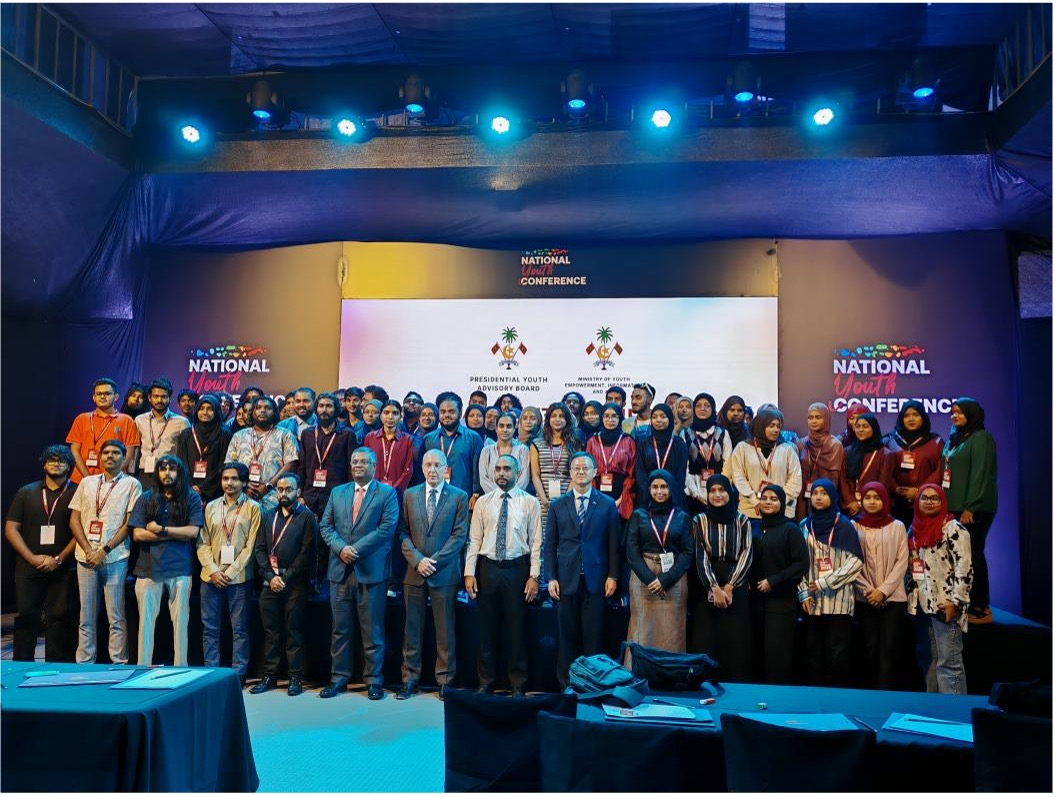
National Youth Conference 2025 --
Last week, at the Maldives National Youth Conference, I was asked a very thought-provoking question: What is the greatest challenge facing young people today? My answer was this: the most important task for young people lies not in any single issue of the present moment, but in thinking about where the world will be heading over the next decade. Ten years from now, today’s youth will become the backbone of their families and societies, assuming greater responsibilities. Preparation must begin in the present.
We are living in a time of profound transformation. Take employment as an example: it is increasingly unclear which industries will hold the greatest potential in 10 years. Education struggles to keep pace as new industries emerge and knowledge quickly becomes outdated. Yet this challenge is also a historic opportunity. We are in the midst of a major industrial revolution. Youth can choose to become pioneers of emerging industries, rather than followers of old ones.
China has the world’s largest and most comprehensive higher education system. According to official data, the number of university graduates nationwide is expected to reach 12.22 million in 2025, a new historical high. Despite this enormous scale, China continues to maintain strong employment absorption capacity and sustained momentum for innovation. Behind this lies clear, stable, and forward-looking national strategic guidance.
The Fourth Plenary Session of the 20th Central Committee of the Communist Party of China adopted the Recommendations of the Central Committee of the Communist Party of China for Formulating the 15th Five-Year Plan for National Economic and Social Development, which systematically incorporates youth development into the overall framework of Chinese modernisation.
Through coordinated efforts in education, employment, scientific and technological innovation, and social participation, the plan provides young people with a long-term, predictable institutional environment for growth and success. It places greater emphasis on aligning education with major national strategies and industrial directions, guiding young people to integrate early into the national innovation system and take on important roles in breakthroughs in key core technologies. By fostering new quality productive forces and improving public service systems, it also offers young people more diverse and higher-quality development opportunities.
Within this institutional framework, Chinese youth have grown from a ‘reserve force’ into a major driving force of scientific and technological innovation. In fields such as artificial intelligence, new energy, high-end manufacturing, and biomedicine, large numbers of young researchers and engineers are active on the front lines. In AI, Liang Wenfeng and his team developed the DeepSeek system, achieving innovative applications in information retrieval and intelligent decision-making. In robotics, Unitree Robotics, founded by Wang Xingxing, born in the 1990s, has developed humanoid robots capable of performing the vast majority of work-related movements. These examples demonstrate that Chinese youth not only possess strong technical capabilities but are also adept at responding to real-world needs through innovation and serving social development.
In social participation, Chinese youth are also active. In the digital economy, young people are promoting the integration of digital technologies into public services and social governance. On the front lines of green development, young engineers are dedicating themselves to cutting-edge fields such as new energy, energy storage, and marine energy. In grassroots services and rural revitalisation, an increasing number of young people are choosing to work in communities and underdeveloped regions, using their professional expertise to improve livelihoods of the local people. Chinese youth are also highly engaged with global issues, actively participating and making their voices heard on international platforms in areas such as scientific cooperation, climate action, and public health. It is worth noting that the team of the Chinese Embassy in the Maldives is also pretty young, with many diplomats in their twenties and thirties working on the front lines alongside Maldivian counterparts, serving as an important bridge for friendship and cooperation between our two countries.
Ultimately, the greatest challenge facing young people lies not in external conditions, but in a matter of choice: whether to wait passively or take proactive action; whether to complain about change or to seek out, seize, and even create opportunities. Through their actions, Chinese youth have provided their own answer.
Both China and the Maldives attach great importance to youth and education development. The Maldivian government continues to invest in youth development, vocational skills training, and the internationalisation of higher education, and has achieved fruitful results with China in areas such as scholarship programmes, cooperation in vocational education, and mutual visits between universities. Looking ahead, the Chinese Embassy will continue to actively build platforms for youth exchange, expand the depth and scope of interactions, and deepen cooperation between young people of the two countries in areas such as scientific and technological innovation, the green economy, digital skills, and social services.
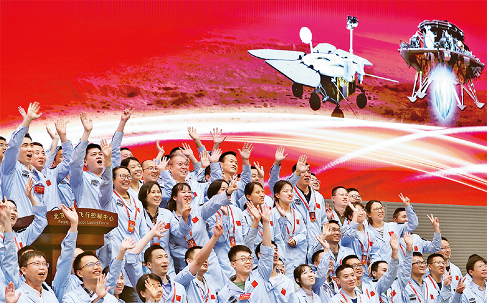
Aerospace scientists celebrating the successful landing of China’s first Mars exploration mission at the Command and Control Hall of the Beijing Aerospace Flight Control Center on 15 May 2021 --
Youth are the pulse of the times and the hope of nations and peoples. With mutual understanding, mutual support, and joint efforts, the young people of China and the Maldives will surely create a brighter future for both our peoples and inject a steady stream of youthful energy into the building of a closer China–Maldives community with a shared future.