Mon, 15 Jun 2026
|DHIVEHI


Advertisement
Concurrent election debate dominates political discourse ahead of upcoming referendum
30 Mar 2026
|
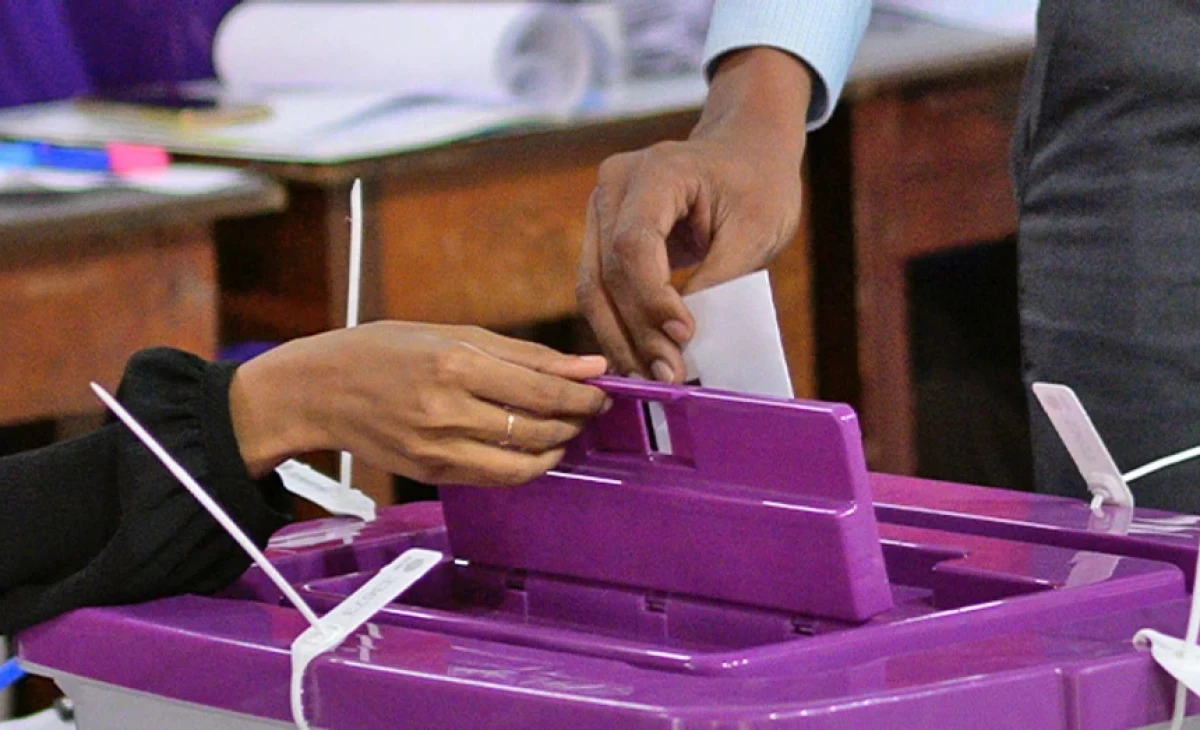
Public referendum on holding concurrent elections scheduled for 4 April 2026 --- Photo: Elections Commission
The proposed constitutional amendment to hold presidential and parliamentary elections on the same day has moved to the forefront of political discourse in the Maldives ahead of an upcoming public referendum.
At the centre of the debate is a structural gap in the current system. While a newly elected president would assume office on 17 November 2028, the sitting People’s Majlis would remain in office until May 2029. This six-month overlap means a new administration must govern alongside a legislature shaped by a previous electoral cycle, often leading to political friction.
Supporters of the amendment, including the ruling People’s National Congress (PNC), along with allied parties such as the Jumhooree Party and the Adhaalath Party, argue that the misalignment creates unnecessary gridlock. During this transition period, a parliamentary majority opposed to the incoming administration can block legislation or initiate proceedings against the president, potentially delaying key policy implementation during the early months of a new term.
Proponents say holding concurrent elections and introducing a fixed five-year parliamentary term beginning on 1 December would ensure both the executive and legislative branches share a unified public mandate. This, they argue, would enable smoother governance and allow immediate coordination on national priorities, including the state budget.
Legal experts, including Uza Fathimath Dhiyana Saeed, have also pointed to the potential for increased voter participation. Parliamentary elections in the Maldives have historically recorded lower turnout than presidential polls. Holding both elections simultaneously could encourage greater public engagement and produce a Majlis that more accurately reflects the electorate. She also noted that the current timing gap can contribute to the formation of parliamentary supermajorities, potentially weakening checks and balances.
However, the proposal has drawn criticism from the opposition Maldivian Democratic Party (MDP) and some legal commentators. Critics, including Uz Shamsul Falaah, argue that altering the duration of an ongoing parliamentary term could infringe on the rights of both elected representatives and their constituents. There are also concerns that local and constituency-focused issues may be overshadowed by the national focus of a presidential campaign if elections are held concurrently.
Former Attorney General Uza Aishath Azima Shakoor stated that while holding concurrent elections could improve administrative efficiency, any change to the five-year mandate for which members were elected must be grounded in public consent.
Meanwhile, lawyer Uz Shaheen Hameed said available studies indicate voter turnout is likely to increase under a combined electoral system. He dismissed concerns that such a change would undermine the constitutional framework or electoral integrity.
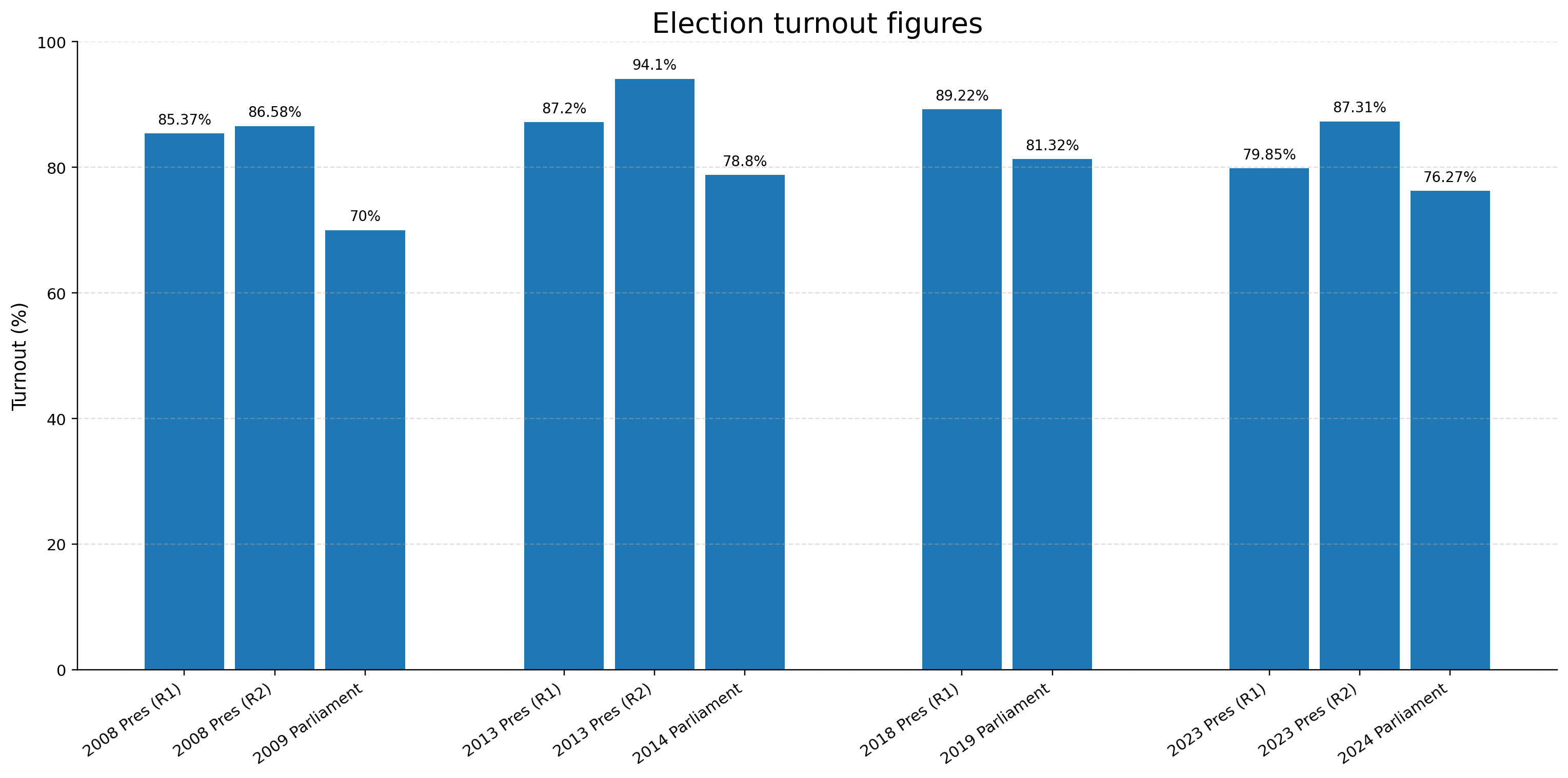
Election turnout figures (2008-2024)
As voters prepare to decide, the question is not simply about election timing. It is about whether the country should continue with a system that divides its mandate at the outset, or move toward one that enables unity of purpose from day one.