Thu, 18 Jun 2026
|DHIVEHI


Advertisement
Vice President calls for greater climate finance for vulnerable nations
18 Jun 2026
|
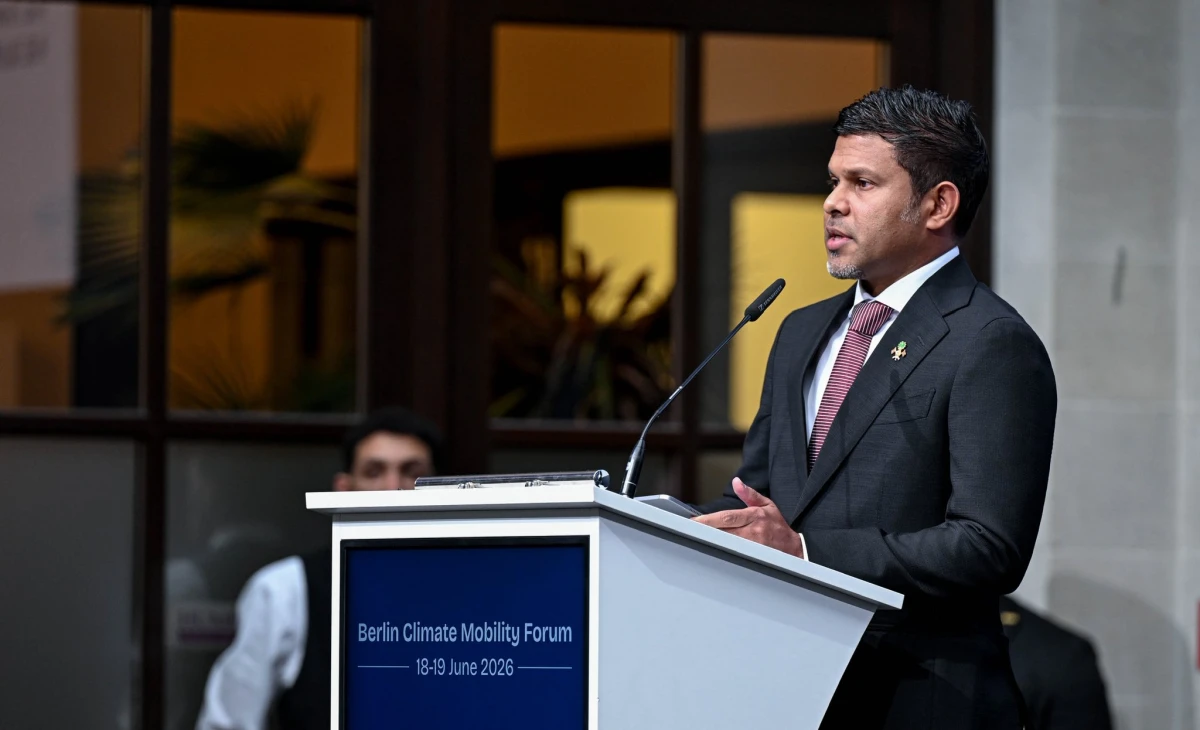
Vice President Uz Hussain Mohamed Latheef --- Photo: President's Office
Vice President Uz Hussain Mohamed Latheef has called for stronger international cooperation and increased climate financing to help vulnerable countries address the growing impacts of climate change and climate-related displacement.
Speaking at the High-Level Segment on the Climate Mobility Principles during the Berlin Climate Mobility Forum 2026, the Vice President said climate mobility is already a reality for countries such as the Maldives and requires urgent, long-term solutions.
He noted that climate change continues to affect the lives of Maldivians, the future of the country's islands and its development trajectory, stressing that efforts to address climate mobility must focus on building resilience and creating opportunities for communities to remain safely in their homes.
Highlighting adaptation efforts undertaken by the Maldives, the Vice President pointed to investments in coastal protection, climate-resilient infrastructure and other measures aimed at strengthening resilience across multiple sectors. He cited Hulhumalé as an example of climate-resilient urban development and said the planned Ras Malé project builds on that approach by creating long-term solutions that support both human security and economic opportunity.
The Vice President also stressed that any movement of people resulting from climate impacts should be planned, voluntary and carried out with dignity. He said vulnerable countries require greater access to climate finance to address these challenges and called on development partners to increase concessional financing, grant assistance, technology transfer and capacity-building support tailored to the needs of small island developing states.
Concluding his remarks, the Vice President welcomed the Climate Mobility Principles and reaffirmed the Maldives' support for people-centred and rights-based approaches to climate action, while emphasising the need to translate commitments into practical measures that help communities build resilient futures.