Wed, 22 Apr 2026
|DHIVEHI


Advertisement
Bill seeks tougher measures against workplace sexual harassment and abuse
22 Apr 2026
|
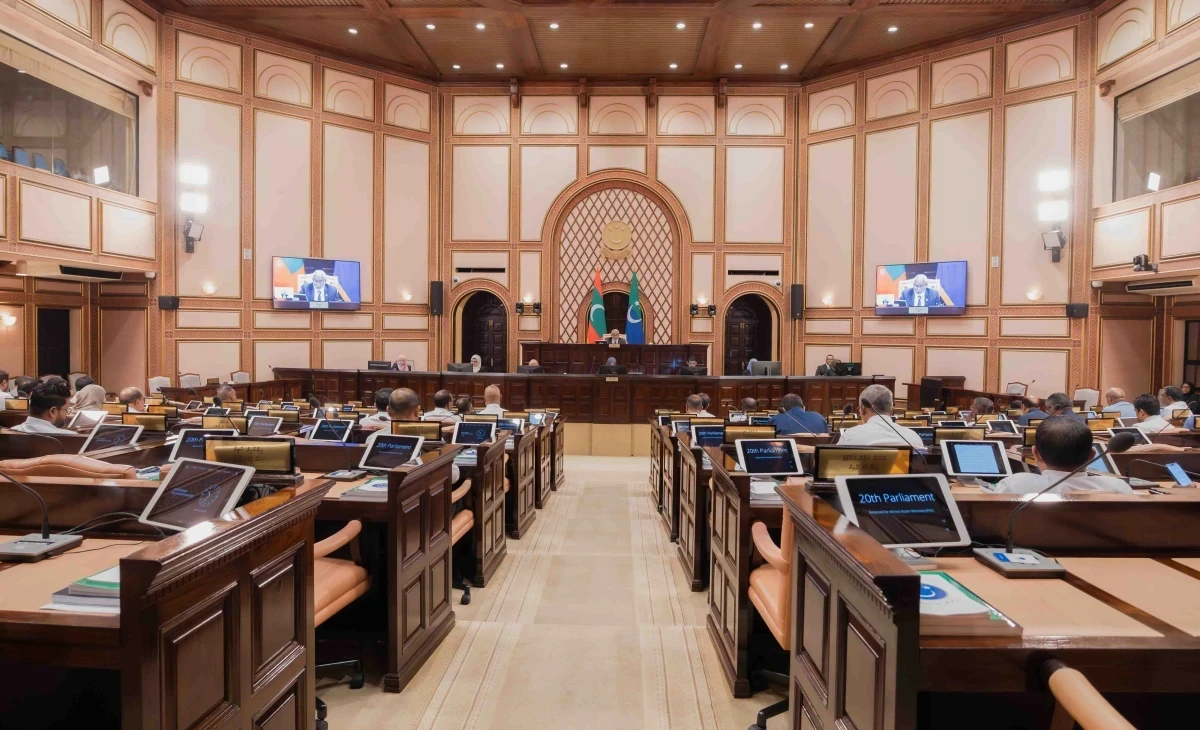
Parliament's 5th Sitting of First session of 2026 --- Photo: People's Majilis
The Government has submitted amendments to strengthen the Prevention of Sexual Harassment and Abuse Act, with proposed changes aimed at tightening workplace safeguards, clarifying employer responsibilities and improving protections for complainants.
The amendments were submitted to Parliament on behalf of the Government by Kelaa MP Abdulla Shareef.
Presenting the bill, Shareef said the proposed changes are intended to strengthen measures already required under the law to prevent and address sexual harassment and abuse in workplaces. He said the amendments would provide clearer legal provisions on the responsibilities of employers and committees established under the law, while also enhancing protections for those who file complaints.
The bill also seeks to strengthen the procedures and mechanisms committees must follow when reviewing complaints, expand oversight of how employers implement the law, and address practical challenges faced in enforcing the legislation.
One of the key changes proposed in the bill is that acts of harassment or abuse would not need to take place strictly within the workplace, during official working hours or only in connection with formal work duties in order to fall within the scope of the law.
The amendments would also require every employer to establish a specific policy on preventing sexual harassment and abuse. The bill states that such a policy must clearly outline its scope, the standards employers are required to uphold, the standards employees must follow, codes of conduct for work and work-related activities, standards of behaviour expected outside the workplace or outside working hours, and the procedures for filing, reviewing and deciding complaints.
The bill states that workplaces must be safe from sexual harassment and abuse, and that employees must be able to carry out their duties without suffering adverse effects from such conduct. Employers would be required to put in place and enforce the necessary measures to ensure this.
Under the proposed changes, Human Rights Commission of the Maldives (HRCM) must be informed once committees formed under the law are established. Each committee must have an odd number of members, with at least three members, and must include representation from both genders.
The bill further details how committees must handle complaints. Decisions taken on cases would have to be communicated within five days. Committees would be given 60 days to review and decide on a complaint, with the option of extending that deadline by a further 30 days if needed.
During the review period, committees would also be granted the authority to suspend the respondent on pay.
In cases where the person accused is a member of a uniformed service, the bill states that the matter must be assessed against the highest standards due to the public trust and authority attached to such positions. In such cases, committee decisions and related matters would need to be submitted to the Civil Court.
The bill also states that any amendments required to existing regulations and procedures under the law, as well as any new regulations and procedures needed in connection with the legal changes, must be completed and published in the Government Gazette within six months of the law taking effect.
If passed, ratified and published in the Government Gazette, the amendments would come into force three months later.