Sun, 28 Jun 2026
|DHIVEHI


Advertisement
Settling Mars or bettering Earth?
28 Jun 2026
|
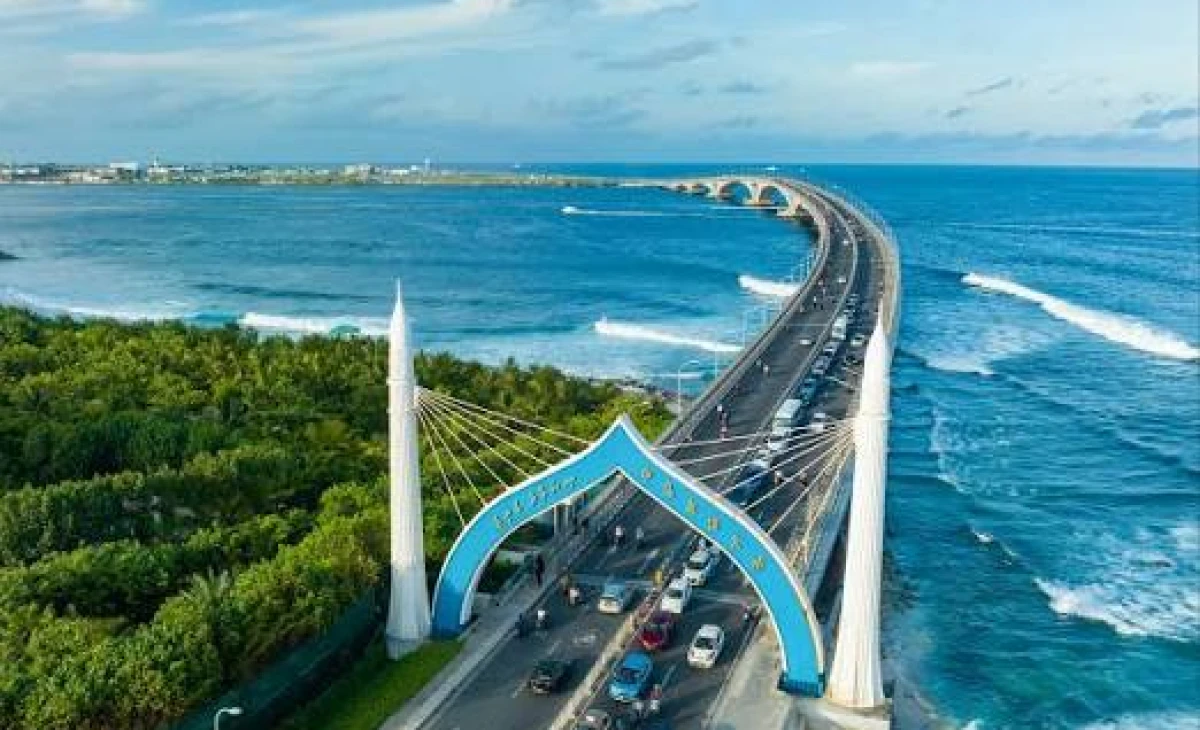
China-Maldives Friendship Bridge --- Photo: Embassy of China
Shortly after the outbreak of the U.S.-Israel-Iran conflict, a fellow diplomat said jokingly to me, “The Earth seems to be getting more complicated by the day. With China's technological progress, perhaps you should start helping humanity settle on Mars.”
“Settling Mars or Bettering Earth?” I replied. “That is the question.”
Beneath the humor lies a serious question: when faced with global challenges, do we retreat into division and pass responsibility to others, or do we join hands to build a better future together?
Not long ago, China released the white paper “More Just and Equitable Global Governance: China's Principles, Proposals and Actions”, which provides a systematic answer to this question. The white paper points out that the reform of the global governance system is at a historical turning point, and that the international community needs more than ever to strengthen coordination and cooperation, improve global governance, and promote a fairer and more equitable international order.|
Over the years, as China's overall national strength has continued to grow, the international community has paid close attention to the question of how China may reshape the international order. Some observers tend to view China through the lens of great-power competition and power transition. They argue that major concepts and initiatives proposed by China - including the Belt and Road Initiative, the vision of building a community with a shared future for humanity, and the four global initiatives - are intended to establish a new sphere of influence, and some even attempt to explain them through historical notions such as the “tributary system.” Yet if one moves beyond the mindset of zero-sum competition, it becomes clear that China has never sought to answer the question of “who should dominate the world.” Rather, China seeks to answer the question of “how to build a better world.”
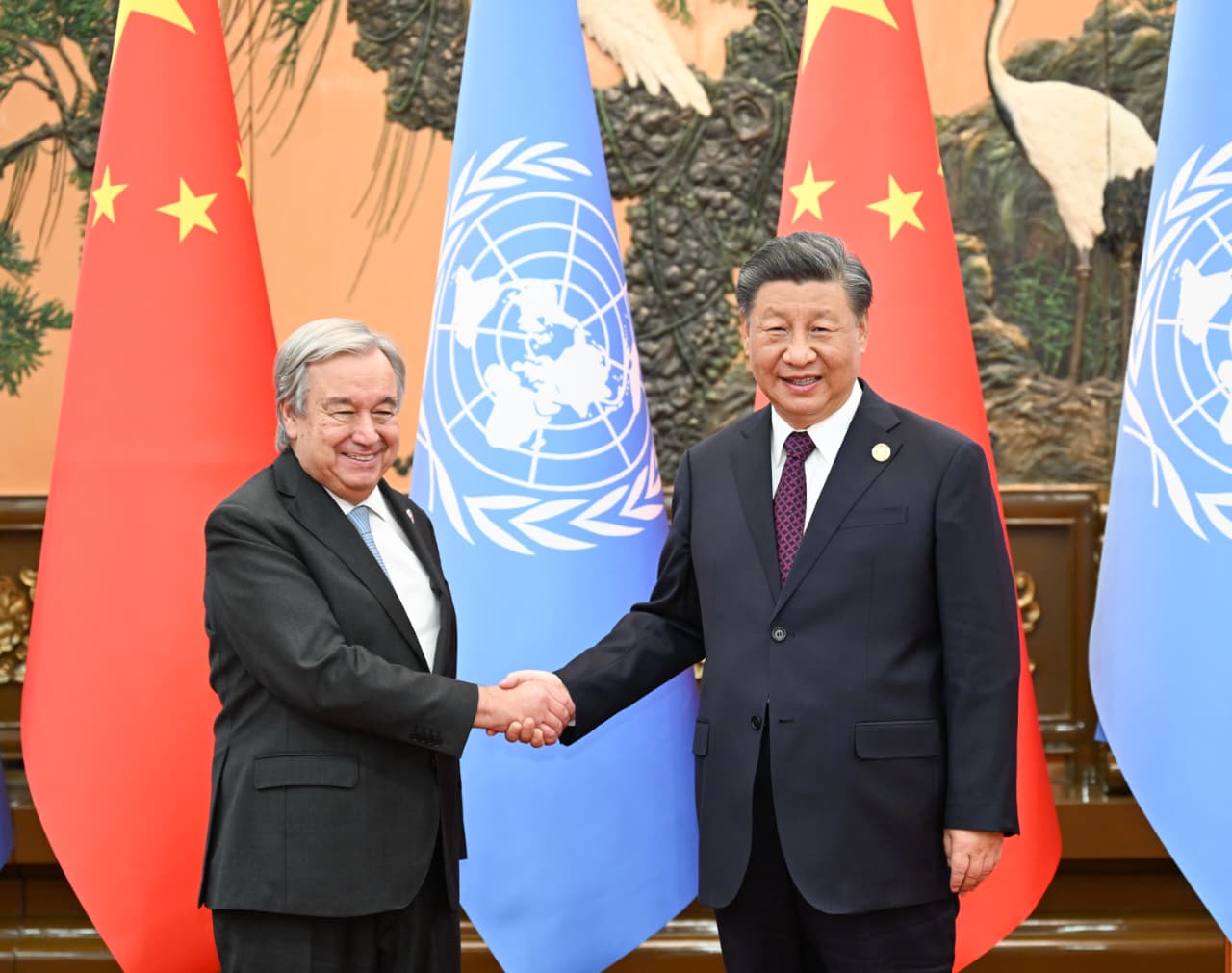
The Belt and Road Initiative promotes connectivity. The Global Development Initiative focuses on addressing the development deficit. The Global Security Initiative responds to security challenges. The Global Civilization Initiative promotes exchanges and mutual learning among civilisations. The Global Governance Initiative advocates extensive consultation, joint contribution and shared benefits, and promotes the development of the global governance system in a fairer and more equitable direction. China firmly upholds the international system with the United Nations at its core, the international order underpinned by international law, and the basic norms of international relations based on the purposes and principles of the UN Charter. Keeping the common interests of the international community in mind, China remains committed to providing more international public goods for the world.
For developing countries, discussions about the international order are undoubtedly important. Yet what matters even more is whether development needs are met and practical problems are addressed. Ultimately, a country's contribution to global governance should be judged by what it contributes to the international community and what opportunities it creates for other countries and their peoples.
The development journey of the Maldives offers a vivid example. For many years, China has provided support in line with the Maldives' economic and social development needs in areas such as infrastructure construction, housing improvement, healthcare and human resource development. From the China-Maldives Friendship Bridge to the Velana International Airport Expansion Project, from social housing programs to cooperation in combating the COVID-19 pandemic, China has brought not only capital and technology, but also development opportunities and greater connectivity.
During my time working in the Maldives, I have often heard local friends speak about how Chinese-assisted projects have improved their daily lives. Some have seen their commuting time shortened thanks to the China-Maldives Friendship Bridge. Others have benefited from improved living conditions through housing projects. Still others have gained broader development opportunities through training programs and scholarships provided by China. These changes may not attract as much attention as developments in international affairs, but they are real improvements taking place in people's everyday lives. For many developing countries, this is precisely the significance of the international public goods that China provides.
Today's world is an interconnected and interdependent whole. In the face of global challenges such as climate change, regional conflicts and public health crises, no country can remain unaffected, nor can any country solve all problems on its own. What the international community needs is not new confrontation and division, but greater cooperation and solidarity; not zero-sum game, but shared development; not power politics, but fairness and justice.
The Chinese science-fiction film “The Wandering Earth” presents an imaginative scenario: when Earth faces an existential crisis, humanity does not choose to flee its home aboard spacecraft in search of another planet. Instead, it builds ten thousand planetary engines to propel the entire Earth toward a new future. Behind this imaginative story lies a distinctive way of thinking about common challenges: when facing turbulent times, the answer is not for each person to fend for themselves, but for all to work together in the same boat.
Today, the international community faces a similar choice. Will the world slide toward division and confrontation, or will nations draw their destinies closer together? China advocates building a community with a shared future for humanity and improving the global governance system because it believes in a simple yet profound truth: no country can sail into the future alone, and no country should be left behind.
Humanity has only one Earth and only one shared future. Rather than searching for another planet, we should join hands to build a better home for all on the Earth we share.