Wed, 01 Jul 2026
|DHIVEHI


This July 1 marks the 105th anniversary of the founding of the Communist Party of China (CPC). One hundred and five years ago, few could have imagined that a political party with just over 50 members at its inception would grow into the world's largest ruling party, with a membership exceeding 100 million today. Under the leadership of the CPC, China has transformed itself from a poor and underdeveloped country into a prosperous and strong nation. What is the secret behind this remarkable success? The answer lies in several forms of perseverance.
The Communist Party of China has remained firmly committed to the people, upheld a people-centered philosophy of development, and ensured that the fruits of development are shared by all. Representing the fundamental interests of the overwhelming majority of the Chinese people, the CPC has, since its founding, borne the unmistakable imprint of "the people." Serving the people wholeheartedly has always been its fundamental purpose.
Through relentless perseverance and arduous struggle, the CPC has led the Chinese people in accomplishing the historic transformation from standing up to growing prosperous and becoming strong. In just a few decades, China completed the process of industrialisation that took developed countries centuries to achieve, rising to become the world's second-largest economy and the world's largest manufacturing country. It has eradicated absolute poverty – a historic achievement – and built a moderately prosperous society in all respects. The average life expectancy has risen from 35 years to 79 years. China has established the world's largest social security system, while basic medical insurance now covers more than 1.3 billion people. Under the leadership of the CPC, China has created the twin miracles of rapid economic growth and enduring social stability.
The Communist Party of China has established and been practicing a correct understanding of what it means to perform well, remained committed to long-term strategic planning, and ensured strong policy continuity. The Party has always regarded the benefit of the people as their greatest political achievement. It has focused not only on accomplishing tangible tasks that people can see and benefit from, but also on laying solid foundations for sustainable development and long-term prosperity.
The CPC possesses an extraordinary capacity for long-term strategic planning. It has consistently used the Five-Year Plans as a key instrument of national governance, advancing major initiatives from one planning cycle to the next in a steady and orderly manner, while seeing one blueprint through to the end. This institutional strength is one of the clearest features distinguishing China's governance systems from the Western model of alternating multi-party governments.
Since the First Five-Year Plan was launched in 1953, China has successfully completed fourteen consecutive Five-Year Plans. Throughout this process, development objectives have remained consistent across successive stages, and policies have maintained strong continuity and stability. Long-term national strategies are not abandoned or reversed with changes of government, enabling China to undertake major projects spanning decades and implement far-reaching national strategies with consistency and confidence.
One of the best examples is the Three-North Shelterbelt Forest Program. Planned as a 73-year endeavor, the project was launched in 1978 and is scheduled for completion in 2050. It has been divided into eight phases and incorporated into successive Five-Year Plans for implementation. After more than four decades of sustained effort, the expansion of desertification has been fundamentally brought under control, and a robust ecological security barrier has been established across northern China.
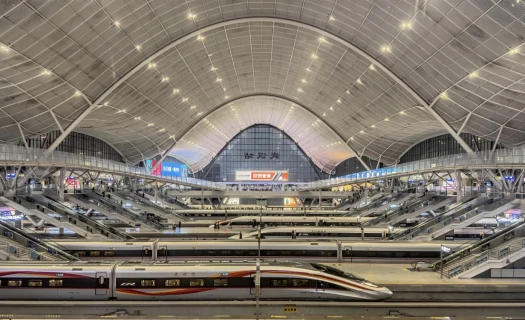
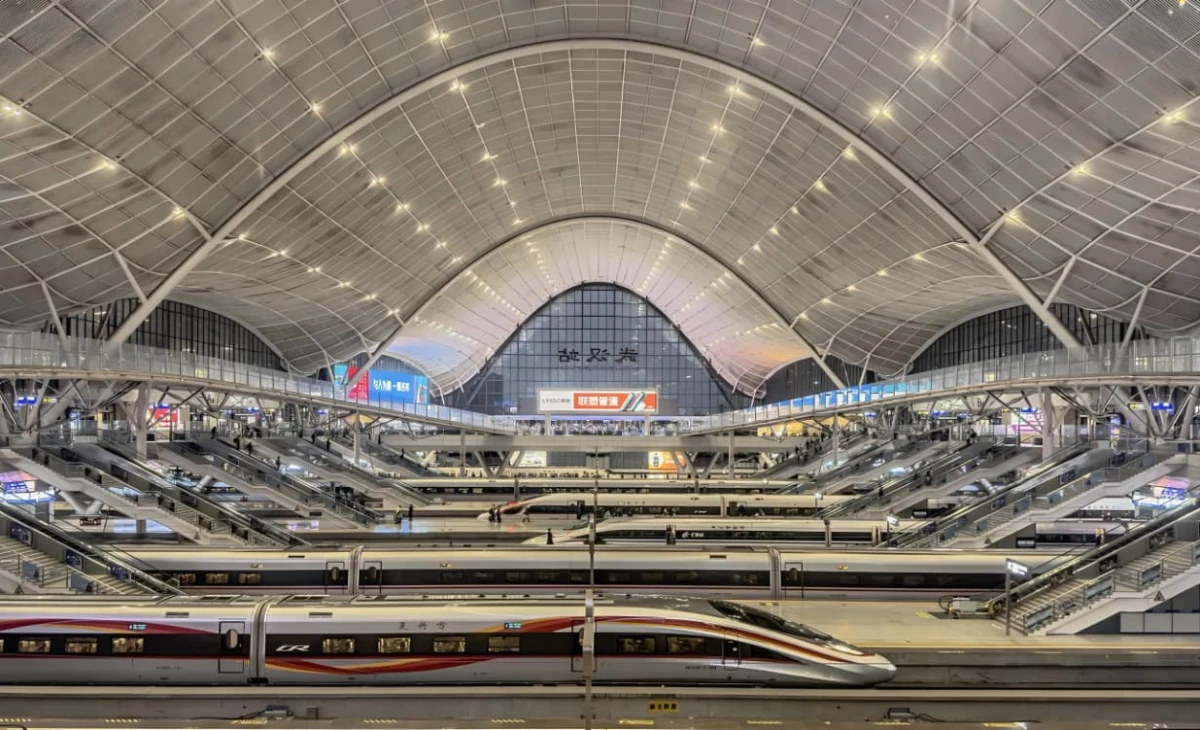
China's high-speed railway network provides another compelling example. Built through successive rounds of Five-Year Plans, China's operational high-speed rail network now exceeds 50,000 kilometers, accounting for more than 70 percent of the world's total. Today, 97 percent of Chinese cities with populations of more than 500,000 are connected by high-speed rail.
This year marks the launch of China's Fifteenth Five-Year Plan. China will continue to pursue its long-term development goals by building on the achievements of one administration after another and ensuring that each Five-Year Plan is seamlessly linked with the next. Through this steadfast commitment, the country's long-term vision will be translated into reality step by step, providing ever stronger foundations for Chinese modernization.
The Communist Party of China has consistently attached great importance to strengthening itself, remained committed to self-reform, and ensured that the Party preserves its advanced nature and integrity. Over the past century, the CPC has relied externally on developing whole-process people's democracy and placing itself under the supervision of the people, while internally advancing full and rigorous Party self-governance and promoting self-reform. It has demonstrated the courage to uphold the truth and correct mistakes, to turn the blade inward and scrape the poison from the bone, thereby ensuring the Party's enduring vitality and continued growth.
Since the 18th CPC National Congress, General Secretary Xi Jinping has creatively applied the basic tenets of Marxism, carried forward and enriched the Party's valuable experience accumulated over more than a century of Party building, and drawn extensively on the wisdom of governance, the principles of self-cultivation, and the moral philosophy of governance embodied in China's fine traditional culture. On this basis, he has put forward a series of new concepts, new thinking, and new strategies for exercising Party self-governance and strengthening the Party, forming Xi Jinping Thought on Party Building.
Guided by this thought, the CPC has confronted the prominent problems and serious risks within the Party head-on. With the resolve to "offend a thousand rather than fail 1.4 billion," it has adopted the strategic policy of exercising full and rigorous Party self-governance, addressed disorder with strict discipline, and opened a new chapter in the self-reform of a century-old Marxist governing party.
These efforts have driven historic achievements and historic transformations in the cause of the Party and the country. At the same time, Xi Jinping Thought on Party Building has provided an important reference for addressing global challenges facing governing parties, including strengthening self-supervision, combating corruption, enhancing governance capacity, and maintaining unity and cohesion. It has also offered valuable inspiration to political parties across the developing world in leading national modernisation, while contributing Chinese wisdom to the advancement of global political civilisation.
The Communist Party of China upholds the principle of helping others to succeed while pursuing one's own success, remains committed to a global vision, and works to build a community with a shared future for mankind. Peace, amity and harmony are values that the Chinese nation has cherished and passed down for more than 5,000 years. The Chinese nation does not have the DNA for aggression or hegemony. The CPC is committed not only to seeking happiness for the Chinese people and rejuvenation for the Chinese nation, but also to embracing the ideal that all under heaven is for the common good. It regards making new and greater contributions to mankind as its mission.
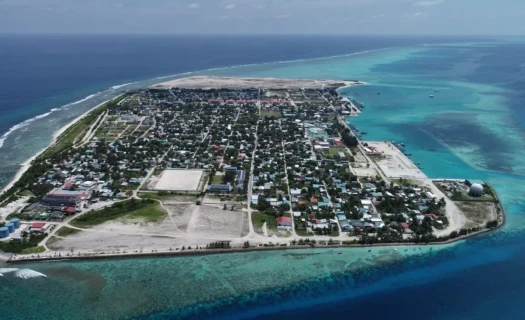
On August 30, 2018, thanks to the ingenuity and dedication of Chinese engineers, the China–Maldives Friendship Bridge was officially opened to traffic, ending the physical separation between Malé and Velana International Airport and putting the development of the Greater Malé region onto a fast track. In 2024, President Dr Mohamed Muizzu paid a state visit to China, becoming the first foreign head of state received by China that year. During the visit, the two heads of state jointly announced the elevation of China–Maldives relations to a Comprehensive Strategic Cooperative Partnership and reaffirmed their commitment to jointly building a China–Maldives community with a shared future, ushering bilateral friendship and cooperation into a new stage.
On January 1, 2025, the China–Maldives Free Trade Agreement officially entered into force, making China the first major economy to conclude a free trade agreement with the Maldives. In the same year, the number of Chinese tourists visiting the Maldives exceeded 320,000, making China the Maldives' largest source of visitors for several consecutive years. At present, the China-assisted China–Maldives Friendship Hospital and the Malé–Villimalé Road Project is progressing steadily. Once completed, they will significantly improve the well-being of the Maldivian people. As a new wave of breakthroughs in AI unfolds, the two countries will further expand mutually beneficial cooperation in such fields as fisheries, agriculture and new energy technologies, jointly writing a new chapter in China–Maldives friendship.
The past, the present and the future of China–Maldives friendship offer the most vivid illustration of “Perseverance”. Designed to serve for a century, the China–Maldives Friendship Bridge stands as more than a landmark of infrastructure; it is a monument to the enduring friendship between our two countries. I am confident that, a hundred years from now, it will still rise proudly above the azure waters of the Maldives, bearing witness to the realization of a China–Maldives community with a shared future which is peaceful, secure, prosperous, beautiful and amicable, transformed from a shared vision into a living reality.