Thu, 26 Mar 2026
|DHIVEHI


Advertisement
No constitutional requirement on wording of referendum question: State Attorney
26 Mar 2026
|
No constitutional requirement on wording of referendum question: State Attorney --
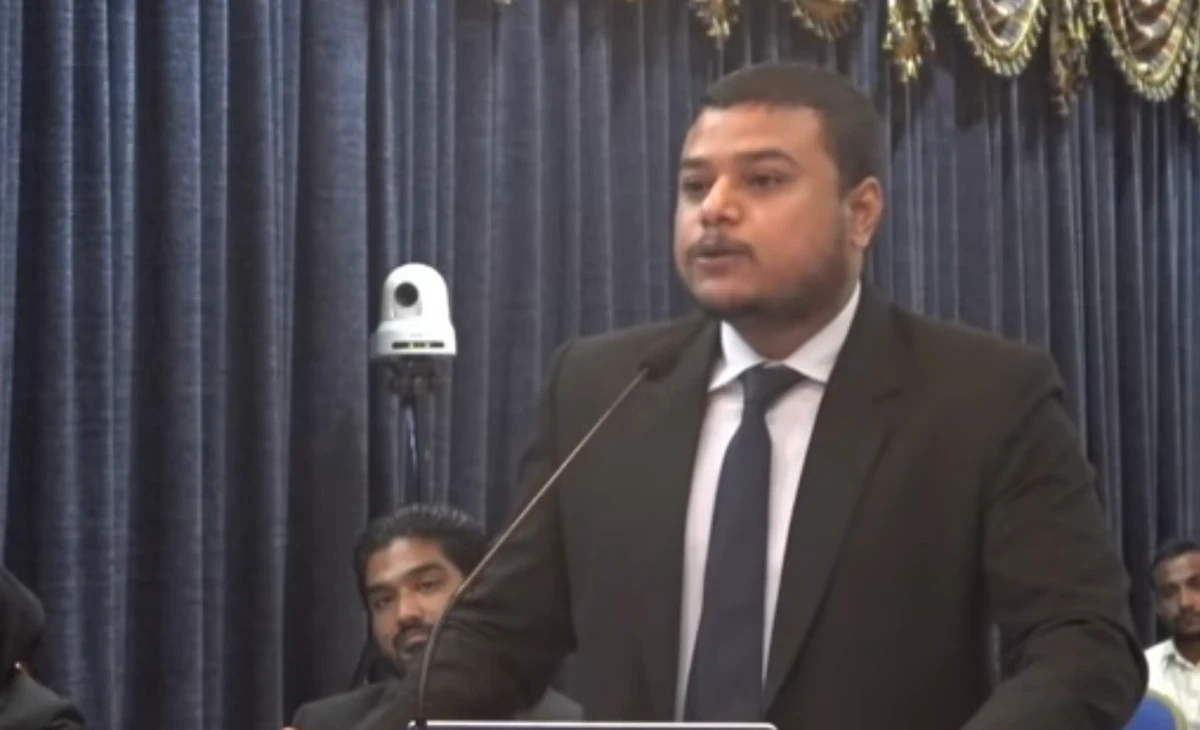
The Attorney General’s Office has told the Supreme Court that there is no constitutional requirement prescribing how a question should be framed when seeking public opinion through a referendum.
The submission was made in response to a case filed at the Supreme Court challenging the legitimacy of the question proposed in relation to a bill on the eighth amendment to the Constitution.
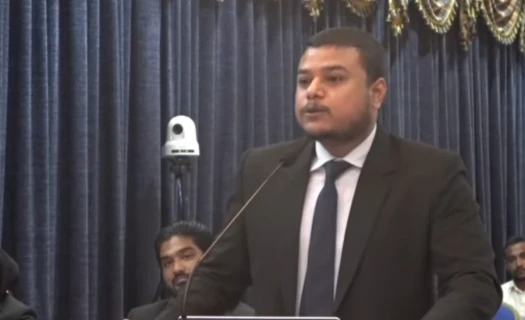
Representing the state, State Attorney Shahudh Mohamed Waheed argued during the hearing that the issue raised in the case centres on whether the proposed question violates Article 262 of the Constitution.
He explained that Article 262 outlines procedural requirements for ratifying certain constitutional amendments and does not govern the specific wording of questions put to a public vote. As such, the state does not consider the matter to constitute a constitutional dispute.
“The issue raised is procedural in nature. This article establishes a framework and conditions but does not prescribe how a question should be formulated. Therefore, it cannot be argued that the question itself creates a constitutional violation,” he said.
Shahudh further noted that the Constitution does not stipulate whether a referendum should present an issue in the form of a question, statement, or any other format. Instead, it simply requires that public opinion be sought where necessary.
He added that Article 262 must be read in conjunction with the relevant referendum law, which sets out the procedures to be followed when conducting such votes.
The State clarified that a breach of Article 262 would only arise if the President fails to hold a required public vote on a constitutional amendment, or acts contrary to the outcome of such a vote once held.
Shahudh also emphasised that the framing of a referendum question falls within the discretionary powers of the President, noting that neither the Constitution nor statutory law provides specific guidance on wording.
Addressing arguments raised by the petitioner, he said that if the concern relates to changes to the term of the People’s Majlis, the focus should be on the substance of the amendment rather than the phrasing of the question itself.
He further stated that the key issue for determination is whether the President has fulfilled the obligations set out under Article 262 – namely, seeking public opinion on amendments passed by the People’s Majlis where required.
Concluding today’s hearing, Chief Justice Uz Abdul Ghanee stated that no further hearings would be scheduled at this stage. He added that if additional clarification is required during the deliberation process, both parties will be notified accordingly.