Sun, 22 Mar 2026
|DHIVEHI


Advertisement
Beyond the no-show: reading into MDP’s failed rally
22 Mar 2026
|
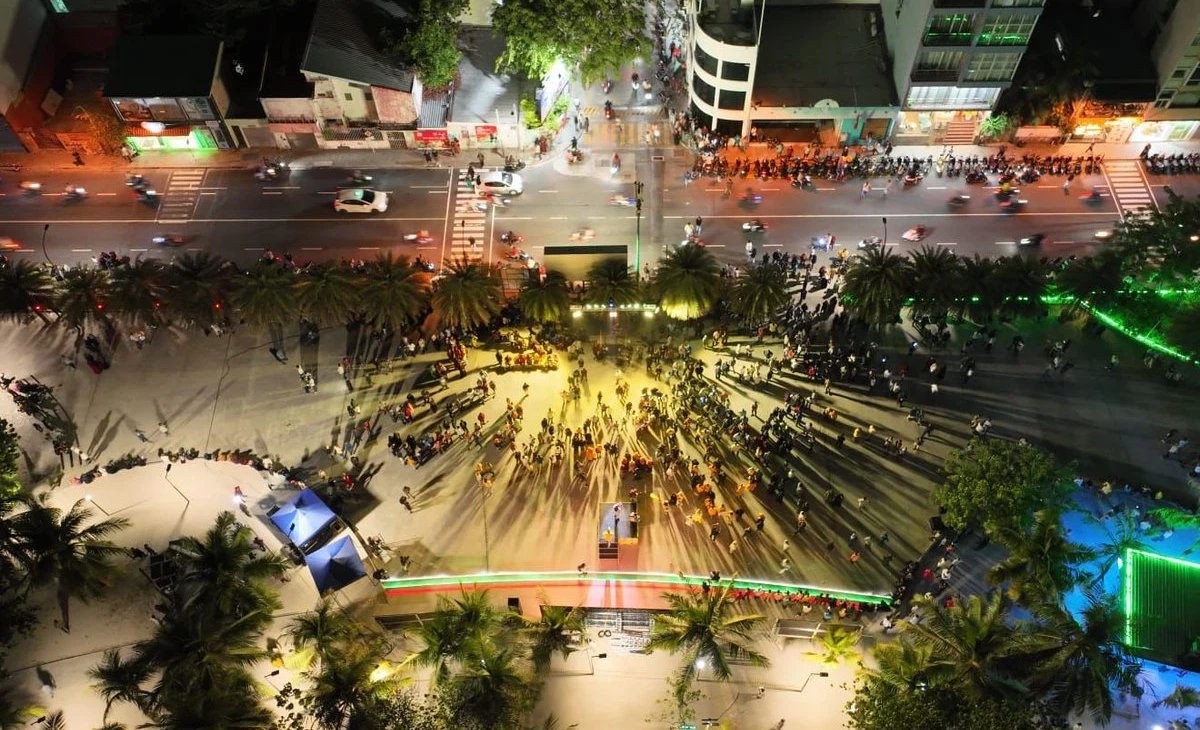
MDP’s protest on 3 October 2025 which saw lower-than-expected turnout
The Maldivian Democratic Party’s (MDP) much-publicised plan to stage a mass rally against the upcoming referendum has quietly fallen through, raising broader questions about the party’s current direction and organisational strength.
In February, MDP announced that it would mobilise supporters for a large-scale demonstration ahead of the 4 April referendum, aimed at contesting the proposal to hold presidential and parliamentary elections on the same day. The declaration, made during a press conference on 24 February, was positioned as the beginning of a wider campaign to galvanise public opposition.
At the forefront of the announcement was Kendhoo MP Mauroof Zakir, who called for strong public participation and signalled the party’s intent to take its message directly to the people. Yet, in the weeks that followed, the momentum never materialised. There were no visible efforts to organise, no sustained messaging, and no indication of groundwork being laid for what was billed as a major political event.
The result is telling: a rally that never took place, and an announcement that faded without follow-through.
For a party long associated with street mobilisation and mass political engagement, this is not a minor lapse. It represents a notable departure from the MDP’s established political identity. Historically, the party has relied on its ability to organise and energise supporters as a core strength. The absence of such mobilisation at a critical moment invites scrutiny.
More importantly, the episode raises concerns about preparedness. With local council elections on the horizon, the lack of visible organisational activity suggests a party that may be struggling to shift from rhetoric to execution. Increasingly, the MDP’s public posture appears centred on criticising government policies rather than building a compelling case for its own candidates and agenda.
The referendum itself, scheduled for 4 April, will ask voters whether presidential and parliamentary elections should be held concurrently. While several political parties have expressed support for the proposal, the MDP stands as its most prominent opponent. That position, however, now appears undermined by the party’s inability to mount even its own flagship protest.
To its credit, the MDP had also pledged a series of activities to oppose the referendum, including the formation of an internal committee to lead the effort. Yet, with less than two weeks remaining, there is little evidence that these plans have translated into meaningful action.
In politics, intent alone is never enough. Organisation, consistency, and visibility are what shape public perception – and ultimately, electoral outcomes. The MDP’s unrealised rally may therefore be more than a missed event; it may be a reflection of deeper challenges within the party’s current strategy.
Whether this is a temporary lapse or a sign of a wider shift remains to be seen. What is clear, however, is that in a political landscape where momentum matters, silence can be just as telling as action.